
Location: Marga Klompenstraat, Sint Antoniusveld, Venray
Status: Realized
Program: 12 single-family houses
Date: 1998
Client: BBOM development
Total floor area: 2262 m2
Description
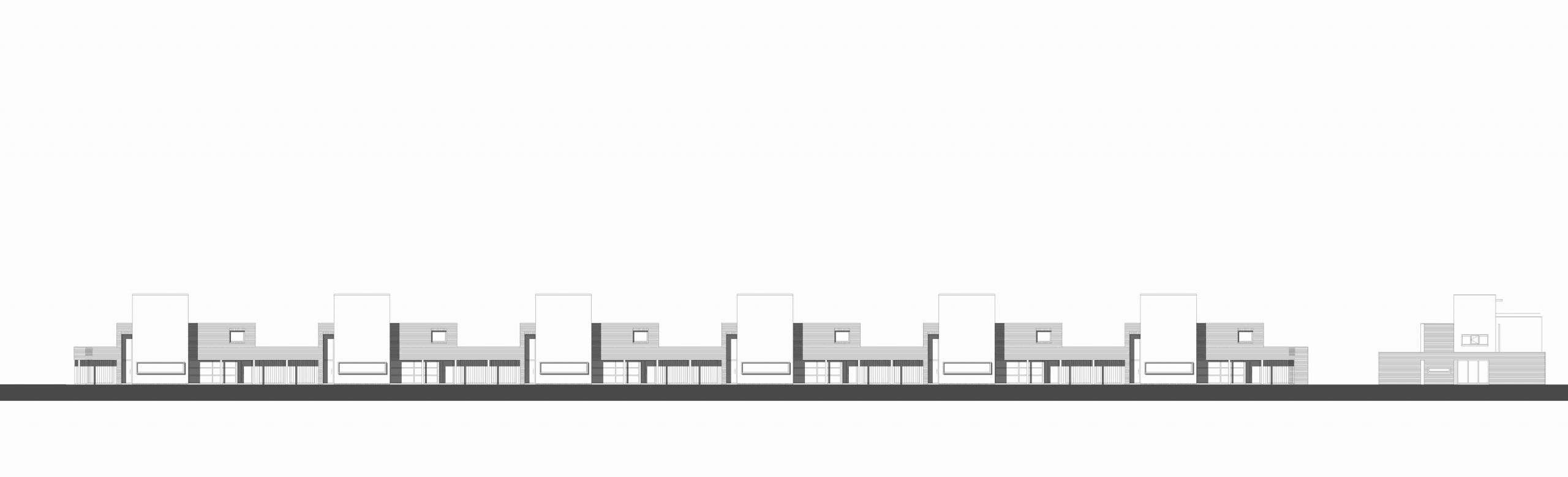
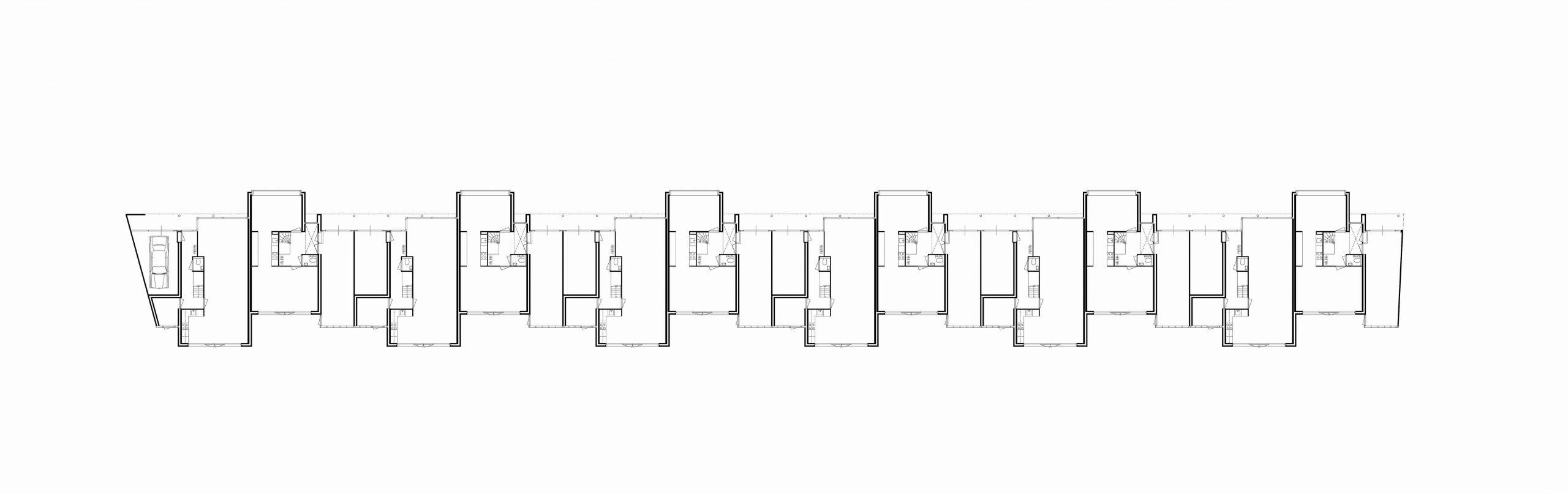
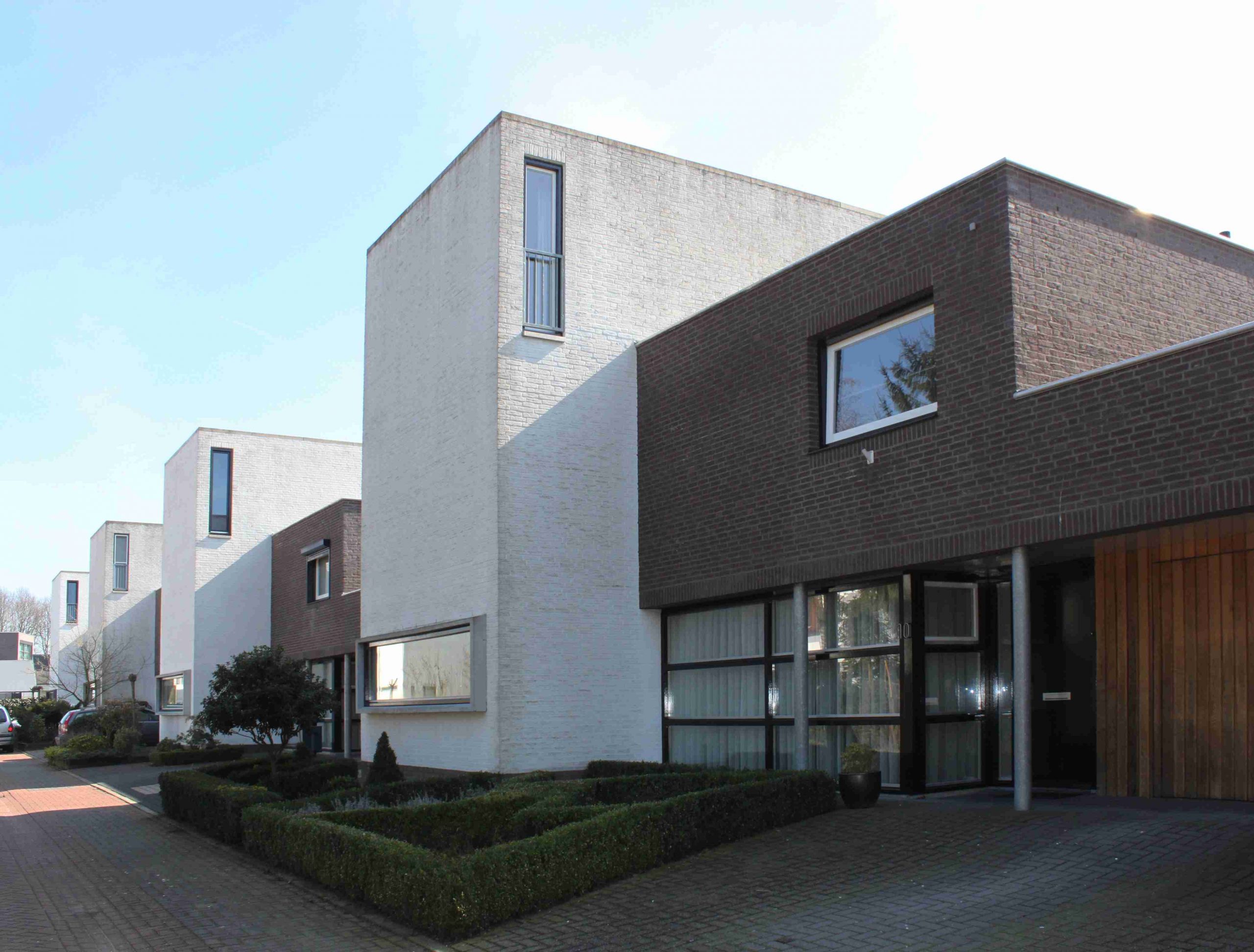
The housing project in Venray, North Limburg, consists of a sequence of 12 residences organized in a row, showcasing an innovative approach to ground-level housing. Although arranged as row houses, the design creates the impression of semi-detached homes due to alternating typologies, fostering a dynamic and engaging facade.
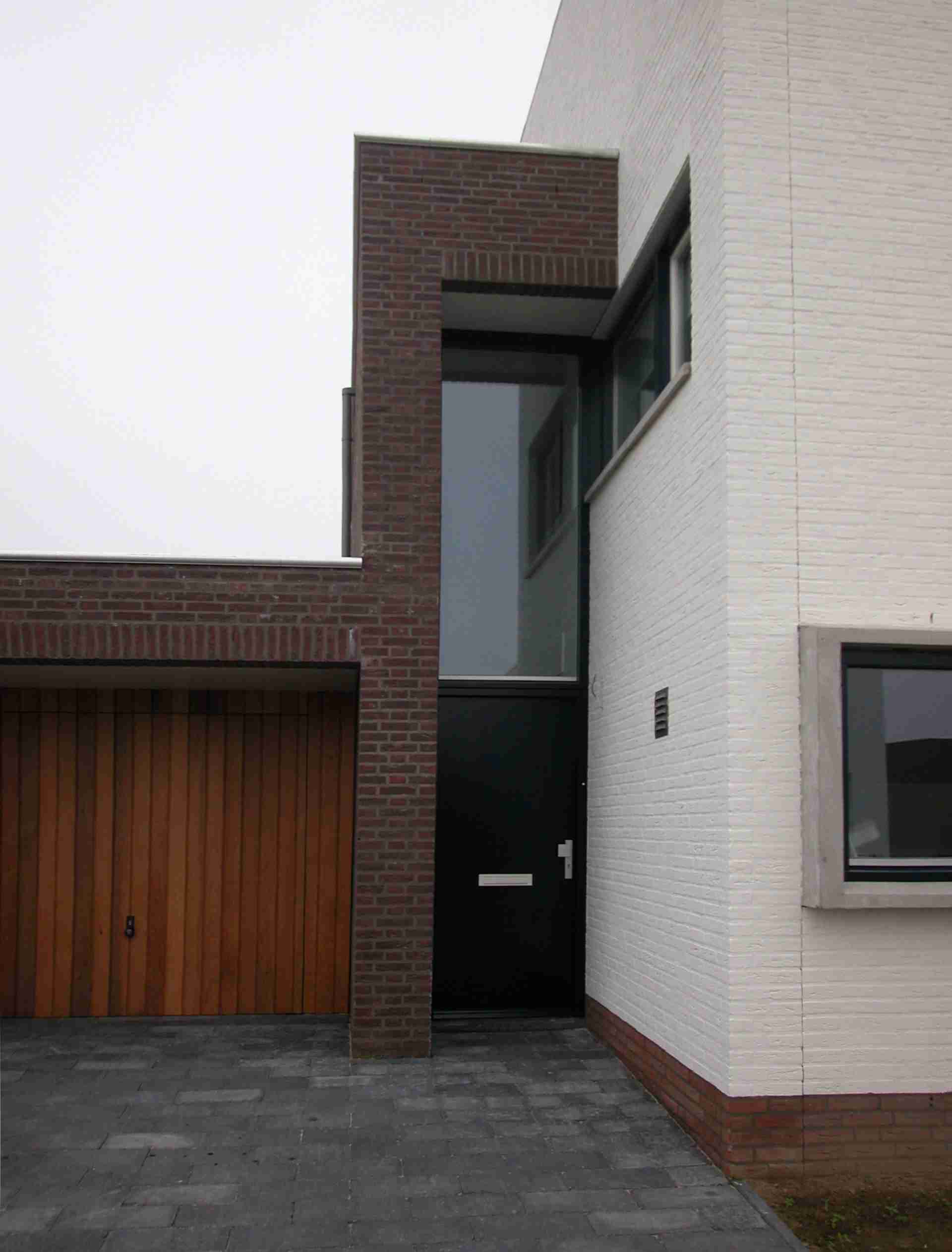
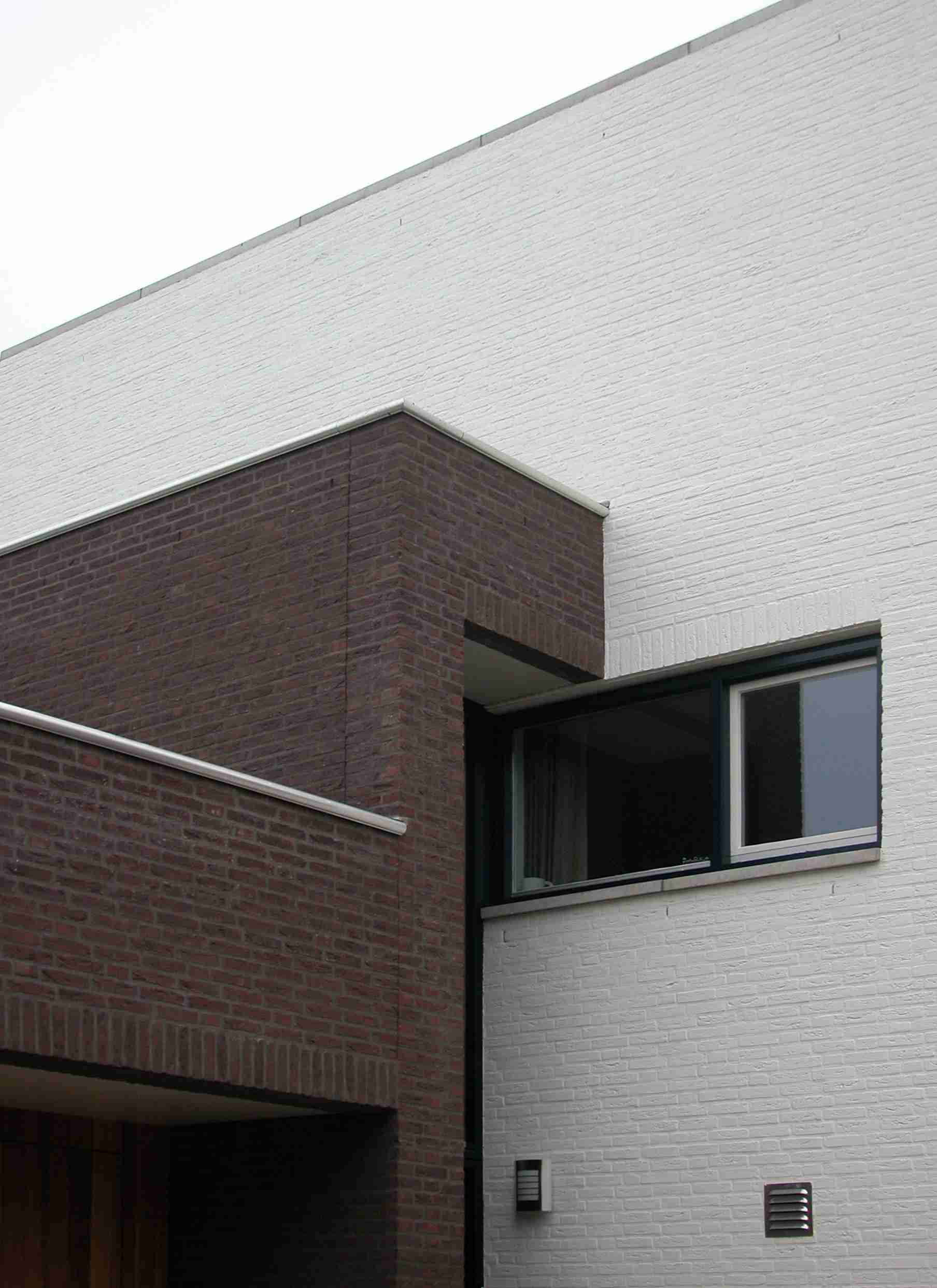
Two distinct types of houses are used to achieve both rhythm and variation. The first typology is a three-story vertical form, constructed from white-painted bricks, introducing verticality to the facade and standing out against the contrasting two-story horizontal form made with dark brown bricks. This interplay between the two types along the row creates a sense of movement and visual interest, avoiding the monolithic look often seen in row housing. The darker two-story volume incorporates steel columns that emphasize horizontal continuity along the facade and add a level of transparency. These columns evoke a sense of “floating,” particularly at the junction where the glass facade meets the columns, lifting the lower volume above the ground. This design choice enhances the unit’s horizontal lines and contributes to a feeling of lightness throughout the structure. In contrast, the three-story white volume features a prominent horizontal window set in a concrete frame that extends slightly from the facade. This window provides ample natural light to the interior while highlighting the horizontal line within the otherwise vertical structure, adding another layer of architectural complexity. By positioning this window as a key feature, the design balances lightness with mass, with the concrete frame reinforcing the visual weight of the structure.
The layout and relationship between the volumes have been carefully crafted to create visual separations while maintaining a cohesive rhythm. The low, dark volume is subtly set back from the high, white volume, enhancing the sense of depth and providing a softer transition between the repeated units. This setback also defines each unit’s boundary, giving the row a sense of openness and breathing space. The design employs a careful choreography of horizontal and vertical lines across both the volumetric forms and the fenestration. Windows are positioned thoughtfully to support this rhythm, with openings that align or contrast according to the volume they occupy. The alternating arrangement of window placements and contrasting heights in each unit contribute to the sculptural quality of the ensemble, giving it a rhythm and plasticity that allows the facades to feel more like an architectural composition than a simple row of houses.
Overall, the housing project in Venray represents a thoughtful and engaging approach to residential architecture. Through contrasting volumes, carefully chosen materials, and an interplay of light and space, the design achieves a harmonious yet visually stimulating environment that emphasizes individuality within repetition, and lightness within grounded forms.

flexile-header-woocommerce

logo@2x

cropped-logo@2x.png
slider-1-image1
s2